
Saturday, December 31, 2005

Thursday, December 29, 2005
ahoy

A couple of days ago someone sent me this photo to my phone. I don't know the person who sent it. But I think it might have been the pirate, sending out an S.O.S. I think he needs me.
Wednesday, December 28, 2005
the morning after

As is only befitting my currently nauseated and hungover condition, I poured half a bottle of fish sauce down my leg while semi-consciously muddling about in the kitchen. I'm hungover because yesterday was my birthday. And after an evening of dry martinis and some experimental moves on the dance floor, I finished off the night huddled around a tray of tacos at 2 am with some of my dearest friends. The causal effect of which is that I now smell horribly bad.
Having my birthday mid-holiday season used to really suck. When I was younger, no one was around to celebrate it and if they were, no one remembered or cared. The Christmas frenzy generally drove all other thoughts out of their yet undeveloped pea brains. Even my family had to struggle to pretend like they cared. There was always a ring of hollowness about the whole affair, the two-for-one gifting being only one of the many letdowns. But now if I had to choose I wouldn't have my birthday any other way. Mainly because it truly touches me when my friends do remember to call or write. You really know who your friends are at times like these. We are all busy and preoccupied with our own lives, our own families, and as we get older I think it gets harder to have the same emotional energy left over to think of someone else at this time of year.
It's difficult to pinpoint when this change takes place, but at a certain time, Christmas stops being Christmas and birthdays stop being birthdays. Instead you start to feel like they are just days like any other and the only thing that really differentiates them are as memories, memories of shared times. This makes it hard to live in the moment. Instead, the moment is already being thought as something that will later be remembered, sometimes even before it takes place.
This is not the way that I want to live. But it's hard to experience the holidays in any other way. It is just a time for the production of memory--good memories perhaps, but nonetheless based on a hyperconsciousness of time passing. We are constantly on the move, moving from producing one memory to the next, and if we're lucky we'll even remember them. How do you stop time and truly experience a moment? Can't we just learn to be content with right now?
As the new year quickly approaches I would like to suggest that we allow ourselves to get excited about things again like when we were little. Allow ourselves to look forward to the new year, the next step, the unknown, and stop second guessing ourselves, or preparing ourselves for disappointment. There's a lot that I expect or hope that will happen in the next year but I also resolve to try and appreciate things as they happen, not be afraid of the flow of time, and enjoy life as it is without trying to press everything into discrete memories when the clock clicks over.

(Behold, the magical 405 freeway in all its holiday glory.)
Sunday, December 25, 2005
feeling the christmas spirit

Two turtle doves and a partridge in a palm tree.
Merry Kwanzukkahmas everyone.
Wednesday, December 21, 2005
no high impact gyrations
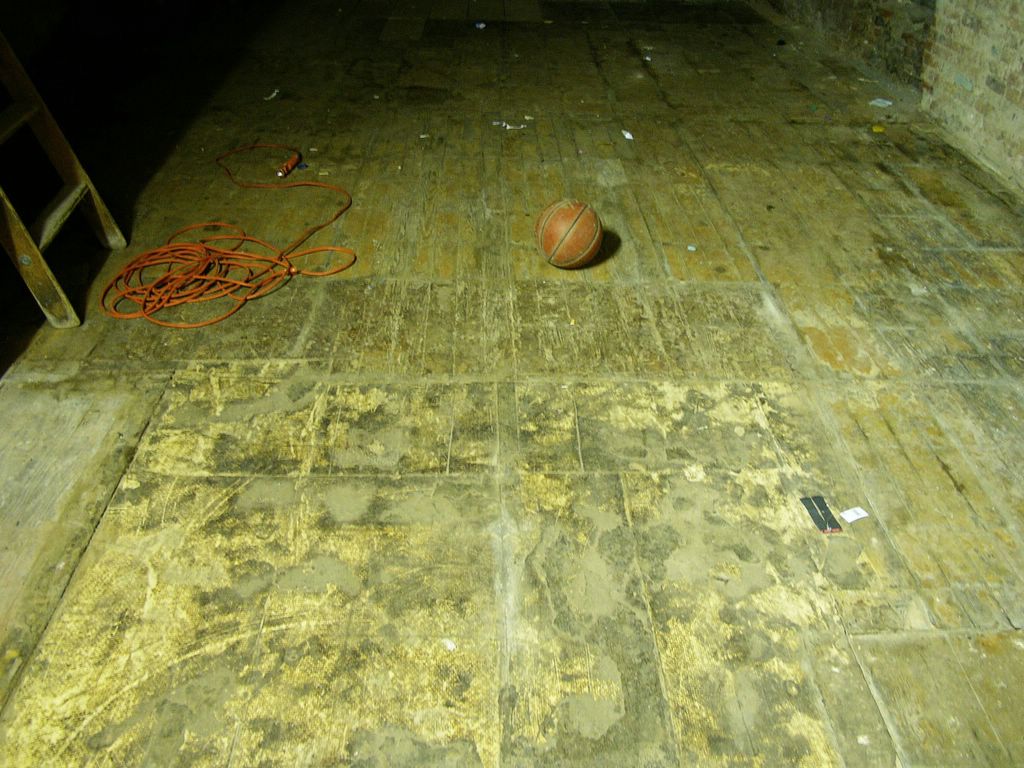
The elevator in my building smelled strongly of Goulden's mustard when I got on today. So much so that in that brief trip down to the parking garage, I was transported to a world of grilled ball park franks saturated with charcoal smoke and the sounds of summer fun. The unseasonably warm 80 degree L.A. weather did not detract from this feeling of going back in time, all of it making me appreciate how connected our olefactory senses are to our memory.
Things have finally settled down here. The frenzied grading has ceased. Christmas presents have been bought. And finally I have a chance to catch up on things, review my week, maybe even the year, and wonder where all the time has gone.
Whether it is related to the Christmas season or not, I have been running into a variety of Hollywood people, perhaps more than I have encountered since I first moved here seven years ago. Maybe it's my own circles of activity that have changed, which if that's the case, I really must be doing something horribly wrong. Though I'm uninterested in the Hollywood scene here and am even less impressed by the idea of celebrities, I frankly find it very difficult to stop staring when I see someone famous. What I usually do is the "pretend I'm not staring" stare. That usually results in a stiff neck and serious eye strain. But how can you not help it? Especially when you notice that most celebrities look like ass in real life.
 First on my list of bad looking real life celebrities is David Alan Grier. Now you probably won't know who he is. It took me a while to figure out that he wasn't one of the Wayans brothers. This is how he normally appears on TV. He's an okay comedian. Nothing really remarkable one way or the other until I discovered that in person he looks noticably older. In fact, he reminds me of non-other than the late:
Redd Fox!
 Then last week at a sample sale, I looked over at the register next to me at a gargantuan figure looming in my field of vision. Aside from my surprise that Marcia Cross, generally considered an "A-list" celebrity, was at a sale that I would be attending, in any case, I think that she's delightfully pretty on TV so I was in no way prepared for seeing her in her unadulterated state.
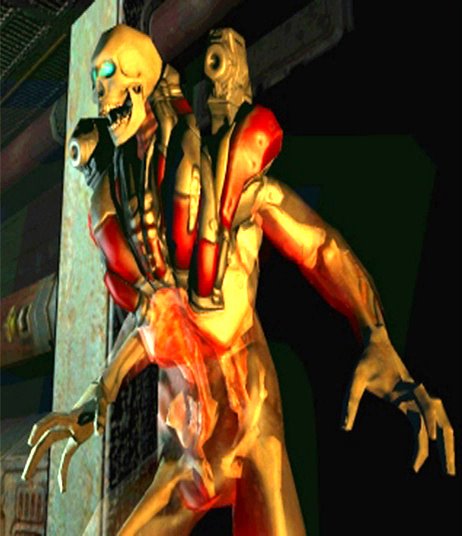 Which is as the spitting image of Skeletor. I am not exaggerating when I say that she must have been about six feet tall but weighed only a hundred pounds or so. Her face gives new meaning to the word "gaunt". Yet, despite her gauntness, her hair is very red and she has freckles, making her lovely still.
 My last celebrity sighting is one that makes me truly marvel at the magic of TV makeup. How is it possible that this actress, Christine Elise, most notable for her appearances as bad girl "Emily" on Beverly Hills 90210 (which I swear I hardly ever watched), someone who I only remember because of this weird thing she had going on with her jaw, would in actuality look uncannily like...
 Gary Busey.
In fact, I was working out right next to her at my kickboxing class this morning and I nearly fell on the floor a couple of times because I was transfixed by her sandpaper-like skin and the deep crevasses lining her face. She looked to me like she might be a hundred years old.
Well, thank god I got that out of my system. Now I can move on to contemplating other less important things like when I'm going to finally hand in my chapter to my advisor and whether I'll get hired in the coming year... For the time being, I think I may have to go back to the elevator, breathe deeply and think of summer barbecues.

Sunday, December 11, 2005
in the shop

For those of you wondering about my spotty postings of late, it's because my flux capacitor is on the fritz and needs to be taken into the shop. Actually I've been busy as it's the end of the quarter but hope to be back to writing soon.
Friday, December 02, 2005
for huck's sake

This day isn't starting well. I'm staring at a brown spot the shape of Australia on my once creamy carpet. I was walking across the floor with a cup brimming full of coffee and sneezed just as I reached my desk. But damn if the coffee wasn't worth it. I was going to write about something totally different today after my brief post-Thanksgiving hiatus, that is before I started checking my email and realized that today is the "For Huck's Sake" benefit party. Even if you're not going to be in San Francisco you should rouse your weary fingers from your keypad and take a look at this story about Huck Gee, an artist who is being deported by U.S. Homeland Security for a crime he was convicted of as an 18 year old that involved a $5 bag of marijuana. It makes you want to pull your hair out.
And for those of my friends who never got around to getting your citizenship (you know who you are) you might want to do something about it before you guys get the boot too. Who knows what is in store for you if you don't. I don't know if they get the internet in North Korea. Will write more as soon as I get that damn spot off the floor.
(Photo from Huck's website.)
Thursday, November 24, 2005
the bird is the word
Q: What did the mama turkey say to the baby turkey?

A: 까불지마! (nyuknyuknyuk)
Happy Thanksgiving!

A: 까불지마! (nyuknyuknyuk)
Happy Thanksgiving!
Wednesday, November 23, 2005
bestill my heart

It's official. I am madly in love with Barack Obama. Democratic Senator of Illinois. That disarming smile. The twinkling eyes. And holding his own against Jon Stewart, oh how he makes me swoon. Take a look at his interview on Comedy Central.
Saturday, November 19, 2005
kankokujin wa...
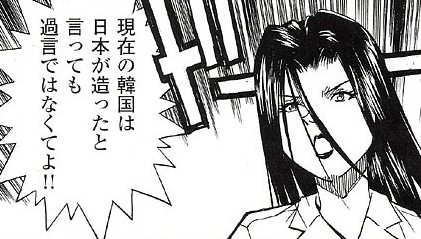
Every now and then the Japanese simply freak out and start some bizarre popular trend like wearing pubic hairpieces or dressing like hawaiian surfer kids. Well, the most recent Japanese craze over Korean entertainers has apparently spawned a newer uglier reactionary wave of racism, setting back race relations in East Asia by one hundred years. I guess the Japanese just never got over losing the Pacific War. A friend just sent me this NY Times article which I'm posting here in full for you to read:
Ugly Images of Asian Rivals Become Best Sellers in Japan
By NORIMITSU ONISHI
In another comic book, "Introduction to
The two comic books, portraying Chinese and Koreans as base peoples and advocating confrontation with them, have become runaway best sellers in
In their graphic and unflattering drawings of
They also point to
Kanji Nishio, a scholar of German literature, is honorary chairman of the Japanese Society for History Textbook Reform, the nationalist organization that has pushed to have references to the country's wartime atrocities eliminated from junior high school textbooks.
Mr. Nishio is blunt about how
"I wonder why they haven't grown up at all," Mr. Nishio said. "They don't change. I wonder why
Mr. Nishio, who wrote a chapter in the comic book about
The reality that
The wave, though popular among Japanese women, gave rise to a countermovement, especially on the Internet. Sharin Yamano, the young cartoonist behind "Hating the Korean Wave," began his strip on his own Web site then.
"The 'Hate
"We weren't expecting there'd be so many," said Susumu Yamanaka, another editor at Shinyusha. "But when the lid was actually taken off, we found a tremendous number of people feeling this way."
So far the two books, each running about 300 pages and costing around $10, have drawn little criticism from public officials, intellectuals or the mainstream news media. For example, Japan's most conservative national daily, Sankei Shimbun, said the Korea book described issues between the countries "extremely rationally, without losing its balance."
As nationalists and revisionists have come to dominate the public debate in
"Lacking confidence, they need a story of healing," Mr. Yoshida said. "Even if we say that story is different from facts, it doesn't mean anything to them."
The
"It is
But the comic book, perhaps inadvertently, also betrays
That peculiar aesthetic, so entrenched in pop culture that most Japanese are unaware of it, has its roots in the Meiji Restoration of the late 19th century, when Japanese leaders decided that the best way to stop Western imperialists from reaching here was to emulate them.
In 1885, Fukuzawa - who is revered to this day as the intellectual father of modern Japan and adorns the 10,000 yen bill (the rough equivalent of a $100 bill) - wrote "Leaving Asia," the essay that many scholars believe provided the intellectual underpinning of Japan's subsequent invasion and colonization of Asian nations.
Fukuzawa bemoaned the fact that
Writing that "those with bad companions cannot avoid bad reputations," Fukuzawa said
As those sentiments took root, the Japanese began acquiring Caucasian features in popular drawing. The biggest change occurred during the Russo-Japanese War of 1904 to 1905, when drawings of the war showed Japanese standing taller than Russians, with straight noses and other features that made them look more European than their European enemies.
"The Japanese had to look more handsome than the enemy," said Mr. Nagayama.
Many of the same influences are at work in the other new comic book, "An Introduction to
The book describes
The book waves away
The book also says the Japanese Imperial Army's Unit 731 - which researched biological warfare and conducted vivisections, amputations and other experiments on thousands of Chinese and other prisoners - was actually formed to defend Japanese soldiers against the Chinese.
"The only attractive thing that
Like many in
"I have to thank
(From The New York Times, November 19, 2005)
Tuesday, November 15, 2005
i know where you peed last summer
I pride myself, if anything, on being able to admit when I'm wrong. But even at my wrongest, there is usually an important lesson to be learned. This particular one should be resoundingly clear. Be careful where you pee.
After a heated debate I had with a guy recently, over whether the rumor is true, whether it is dangerous for men to pee off a boat in the Amazon because parasites will swim up your "member", I was forced to engage in a furious bout of googling producing the following results which I feel it is my hallowed duty to share with the rest of you. If you're squeamish, I forewarn you to stop reading now.
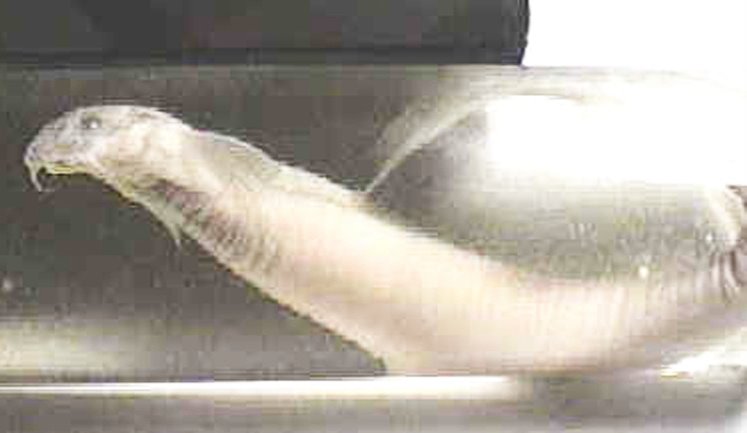
It is a documented fact that there is a parasite native to the Amazon river called the Candiru (Vandellia cirrhosa), affectionately known as the "vampire catfish", which will swim up a stream of pee. According to medical science, firsthand accounts, and urban legend, all of which I weigh equally seriously when determining anything worth repeating, this fish is an agressive urinophilic fish, meaning that it is attracted to the smell of urine. This fish will then locate the source of this smell and swim vigorously up the openings of any human or animal cavity.
If this isn't enough to shiver your timbers, let me add this gruesome detail. After the fish swims up your organ, it spreads its spines, yes that's right spines, and begins to feed off of your tissues and blood.
It was also said that even if one caught the fish by the tail, once in the urethra it could not be pulled out because it would spread itself like an umbrella.
Because the fish spreads its gill covers in trying to get oxygen, the sharp spinous processes on the ends of the opercula engage the urethral wall making extraction from the urethra almost impossible or at least most traumatic.
When candirus parasitize humans, it is usually only when they are skinny-dipping while urinating in the water. The candiru tastes the urine stream and follows it back to the human. It then swims up the anus and lodges itself somewhere in the urinary tract with its spines. Blood is drawn, and the candiru gorges itself on both the blood and body tissue, its body sometimes expanding due to the amount of blood. This is all said to be very painful for the poor person who has this happen to him or her. Unfortunately, they are almost impossible to remove due to the spines. Amputation of the private areas is the cheapest, and most life-changing, way to remove the fish. Actual surgery is extremely expensive and involves inserting the Xagua plant and the Buitach apple up the urethra. These two plants kill and even dissolve the parasitic fish. If surgery is not done in time, the blockage of the urinary tract will prove fatal. The candiru is the only known vertebrate to parasitize humans. (link)
While the jury still appears to be out regarding whether this fish may actually be able to swim up a stream of piss belonging to a guy on a boat, it should be clear that it is not totally impossible. And when in doubt? Cross your legs or pee in a cup. But all humans appear to be fair game, as the Candiru will swim up male and female genitalia alike, and appears to enjoy the anus as well! Clearly a hearty fish. Too bad it's so small or I fancy it may be good eating in the same way that bottom feeders and certain shellfish are particularly tasty. I wonder what the Prophet Mohammed might have to say about this.
For further reading, feel free to look up E. W. Gudger's "On the alleged penetration of the human urethra by an Amazonian catfish called candiru with a review of the allied habits of other members of the family pygidiidae part I" Americal Journal of Surgery 8(1)
I myself am moving onto another promising article found while browsing: Heinrich L. Wehrbein's "Cytological study of gonorrheal pus" Americal Journal of Surgery 8(1)
Who knew medical journals would be so fascinating.
Subscribe to:
Posts (Atom)